Read more

Application
Learn how temperature sensors help monitor thermal behavior in high-density systems, including wire harness-constrained and compact electronic environments.

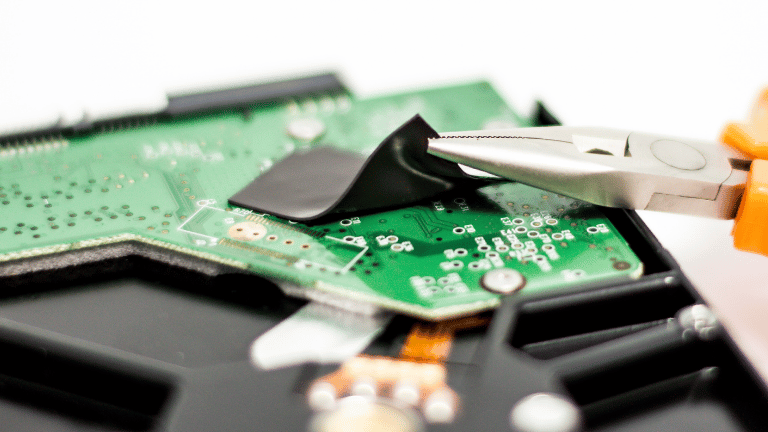
PCB Hotspot Monitoring in High-Density Systems: A Practical Approach to Surface Temperature Sensing
PCB temperature monitoring is a well-established practice, with conventional sensors such as thermistors, RTDs, and IC-based sensors widely used across many applications.
However, as electronic systems become more compact and structurally complex, new challenges are emerging—particularly in systems with high component density, complex layouts, and extensive wire harnessing.
In these environments, the challenge is often not measurement capability, but measurement accessibility.
Evolving System Constraints
In modern electronic systems:
- PCB space is increasingly occupied by components, cables, and harnesses
- Mechanical layouts are tightly constrained
- Airflow paths are less predictable
- Internal and external interfaces introduce additional thermal variation
While these conditions may not always generate extreme heat, they can result in:
- Localized temperature variation
- Gradual heat accumulation
- Areas that are not actively monitored
These factors highlight the need for broader thermal visibility within the system.
Background Thermal Monitoring in Complex Systems
In systems with dense layouts and extensive wiring, thermal behavior is not always concentrated in obvious hotspots.
Instead, temperature conditions may develop gradually due to:
- Heat retention around cable bundles
- Restricted airflow in confined regions
- Interaction between components and surrounding structures
In such cases, surface temperature sensing can serve as a background monitoring approach, helping to:
- Track temperature trends over time
- Identify unexpected thermal buildup
- Provide additional context for system behavior
This type of monitoring is not necessarily focused on detecting critical overheating, but on improving overall system awareness.
Thermal Considerations in Wire Harness and Cable Regions
Wire harnesses and cable assemblies introduce unique thermal conditions:
- They occupy physical space and may restrict airflow
- They can act as thermal barriers or retention zones
- They are often located near connectors and power interfaces
Placing conventional sensors in these regions can be difficult.
Surface-mounted temperature sensors allow measurement:
- Along cable routing paths
- Near connectors and interfaces
- Under or around harness structures
This provides visibility into thermal conditions in areas that are typically not monitored.
Applications in High-Density PCB Environments
High-Density Electronic Assemblies
- Compact layouts limit sensor placement
- Thermal behavior may vary across small regions
- Conventional measurement points may not reflect actual conditions
Surface sensing can help observe localized temperature behavior more directly.
Power and Interface Regions
- Connectors and power paths may introduce localized heating
- Mechanical constraints limit measurement options
Targeted surface sensing supports:
- Observation of temperature trends
- Comparison across design iterations
- Basic validation of thermal behavior
Rethinking PCB Temperature Monitoring
Surface temperature sensing is not intended to replace conventional sensors, but to complement them.
It can:
- Extend measurement coverage
- Enable monitoring in constrained locations
- Support practical thermal evaluation
This combined approach is often more aligned with real-world system conditions.
Practical Considerations
When applying surface temperature sensors:
- Sensor placement should be defined based on thermal relevance
- Surface contact quality affects measurement results
- Calibration may be required depending on application
- Environmental factors should be considered
The objective is to obtain meaningful and interpretable data rather than complete thermal mapping.
Positioning of Printed Temperature Sensors
Printed temperature sensors are well suited for these applications due to:
- Thin and flexible structure
- Surface-mount capability
- Adaptability to constrained geometries
They do not replace conventional PCB temperature sensing methods, but provide additional measurement capability where placement is limited.
Conclusion
As electronic systems become more compact and interconnected, thermal monitoring challenges are shifting from measurement capability to measurement accessibility.
The ability to observe temperature behavior in less accessible regions—such as areas affected by wiring, layout density, and structural constraints—can provide valuable insight into system conditions.
Surface temperature sensing offers a practical approach to support this type of monitoring.
Latest Insights
Wearable heating technology helps seniors enjoy gentle, effective heat therapy throughout their daily routine.

Wearable heating wraps enable controlled, targeted muscle warm-up before physical activity.

Heated eye masks deliver stable warmth to relieve fatigue, improve comfort, and support sleep.

Collaboration Begins Here.