
More Detail

Force Sensing Resistor
A Force Sensing Resistor is a thin, flexible sensor that detects changes in pressure or force by varying its electrical resistance. Its compact design makes it a practical solution for applications requiring pressure and force measurement in limited spaces.
These sensors are easy to integrate and offer consistent performance in detecting subtle or significant force variations. Their adaptability ensures reliable data collection for various configurations.

Reliable and Versatile Force Detection
Force Sensing Resistors provide a simple yet effective way to measure force and pressure changes in compact spaces.
How FSR Works
A Force Sensing Resistor (FSR) is a thin, flexible sensor that detects changes in pressure by varying its electrical resistance. When force is applied, the sensor's resistance decreases, enabling it to measure force changes effectively. FSRs are designed for general force detection rather than precise measurements, making them suitable for basic input and pressure monitoring.
Key Features
- Thin and flexible design for compact spaces.
- Cost-effective and simple to integrate into electronic systems.
- Responsive to applied pressure with predictable resistance changes.
- Reliable performance for general force or pressure detection tasks.
Applications
Force Sensing Resistors are widely used in applications requiring basic force sensing capabilities, including:
- Input Devices: Pressure-sensitive buttons and pads.
- Wearable Devices: Pressure mapping in flexible surfaces.
- Robotics: Touch and force feedback systems.
- Prototyping Projects: DIY and experimental force detection solutions.


Latest Insights
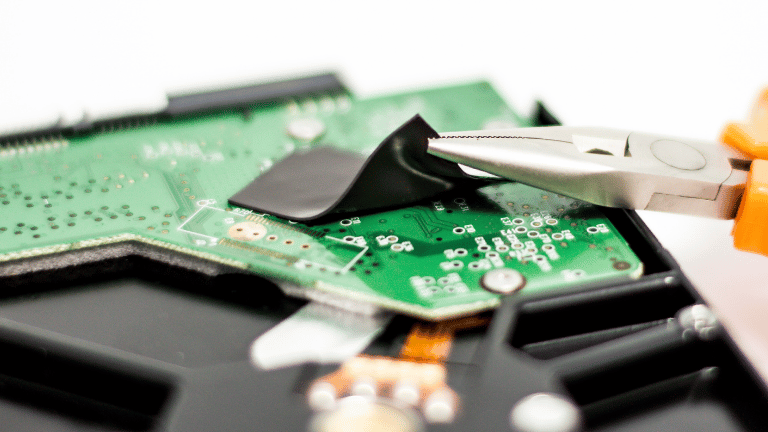
Learn how temperature sensors help monitor thermal behavior in high-density systems, including wire harness-constrained and compact electronic environments.

Explore how surface temperature sensing helps evaluate insulation effectiveness and heat behavior in battery systems, layered structures, and thermal processes.

Explore how printed temperature sensors work, their key characteristics, and how they support surface-based and integration-focused thermal sensing applications.

Collaboration Begins Here.